2026-10-31 · Tom Rivera
How to Spot Moisture Damage in Electrical Outlets After Florida Summer Storms
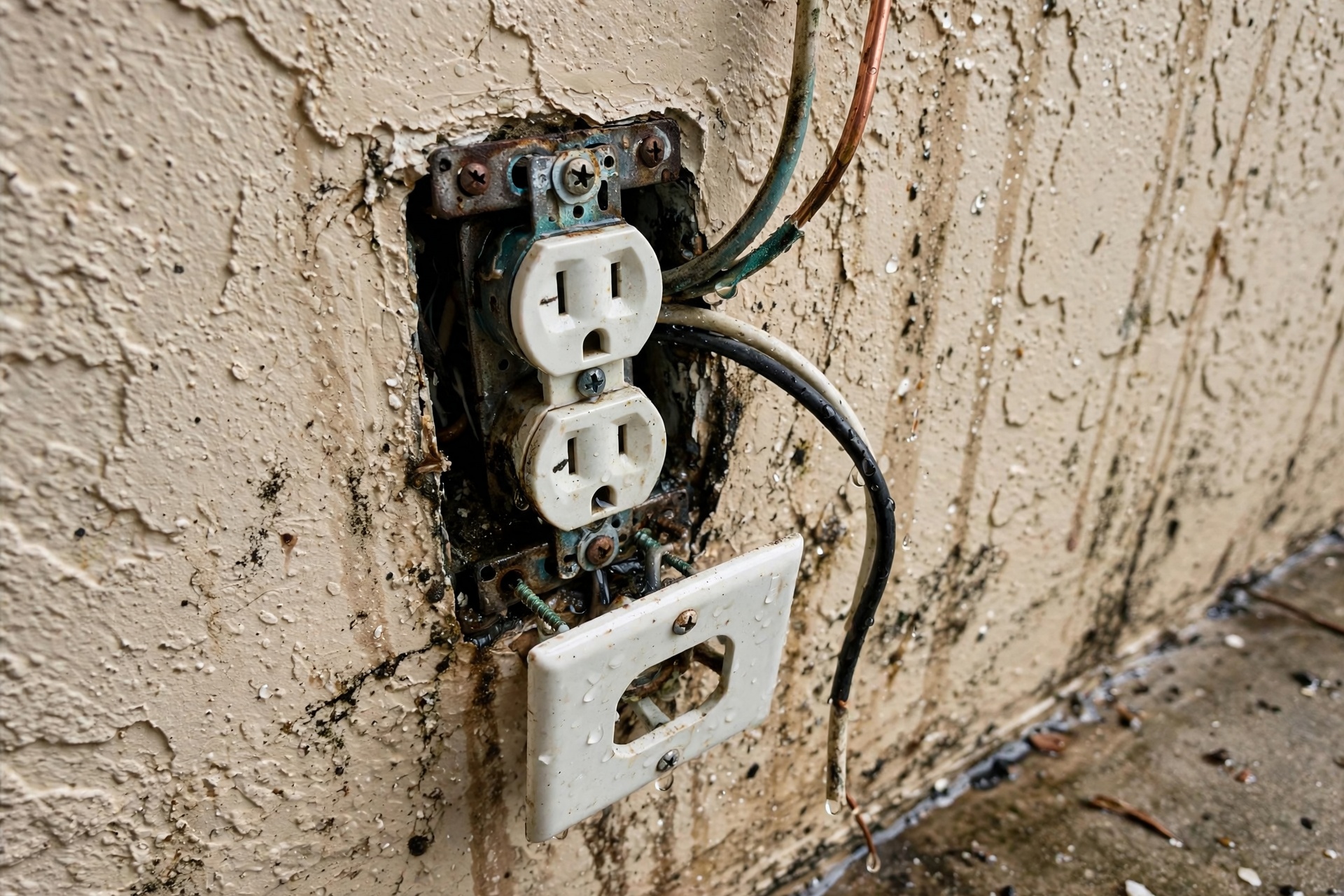
After Florida summer storms hit Port Saint Lucie, check outlets first for a persistent burning smell, black or brown scorch marks around the faceplate, or small sparks when plugging in devices. These indicators appear quickly in St. Lucie County homes because hot humid air combines with driving rain to push moisture behind walls in neighborhoods such as Tradition and White City.
Visual Indicators in Local Housing Stock
Homes built in River Park and St. Lucie West during the 1990s and early 2000s often feature standard 15-amp receptacles that sit close to exterior walls. After a tropical storm passes, look for warped or discolored plastic on the outlet cover, white powdery residue from corrosion, or water stains on the drywall immediately above or below the outlet. In older sections of White City, where slab foundations sit lower, moisture travels upward through the concrete and settles inside the box, causing the brass contacts to turn green within days. These visual cues differ from simple dust because the discoloration spreads in irregular patches rather than uniform grime.
How Tropical Storms Affect Outlets in St. Lucie County
Port Saint Lucie receives repeated wind-driven rain from storms that track between Fort Pierce and Stuart. The combination of 90-plus-degree humidity and sudden downpours forces water through soffit vents and into attic spaces, then down interior walls. Outlets on shared walls with bathrooms or laundry rooms in Tradition frequently show the first signs because those rooms already carry higher baseline moisture. Once water reaches the wiring, the paper insulation inside NM cable begins to swell, creating a faint musty odor that grows stronger over the following week.
Safe Inspection Steps After Storms
Turn off the breaker for the affected circuit before any inspection. Remove the cover plate and examine the wires for green oxidation on the copper or frayed insulation where it enters the box. Use a non-contact voltage tester to confirm power is off, then gently tug each wire to test for brittleness caused by corrosion. Homeowners in St. Lucie West should also check GFCI outlets in kitchens and bathrooms first, because these devices trip repeatedly during storms and can mask deeper moisture issues behind the device.
When Professional Evaluation Is Required
Persistent tripping, flickering lights, or warmth at the outlet face after the storm passes requires immediate attention. Schedule emergency electrical repair if multiple outlets on the same wall show damage, because the wiring run may need replacement rather than simple device swaps. Review the guidance in Preparing Your Home Electrical System for Hurricane Season in Port Saint Lucie for steps that reduce future risk. In some cases, outlet and switch installation using GFCI or tamper-resistant models prevents repeat problems in high-moisture zones. Our 24/7 emergency service remains available for Port Saint Lucie residents who find active water inside an outlet box.